Understanding Autism Spectrum Disorder
Let’s Test What You Think You Know About Autism
When you hear the word autism, what comes to mind?
Take a moment and think about it.
Many people picture someone who avoids eye contact, struggles socially or has difficulty communicating. Some people believe autistic individuals lack empathy or that autism always involves intellectual disability.
But here’s the question : Are these beliefs actually true?
Consider the following statements
Autism always involves intellectual disabilities
People with autism lack empathy
Autism looks the same in everyone
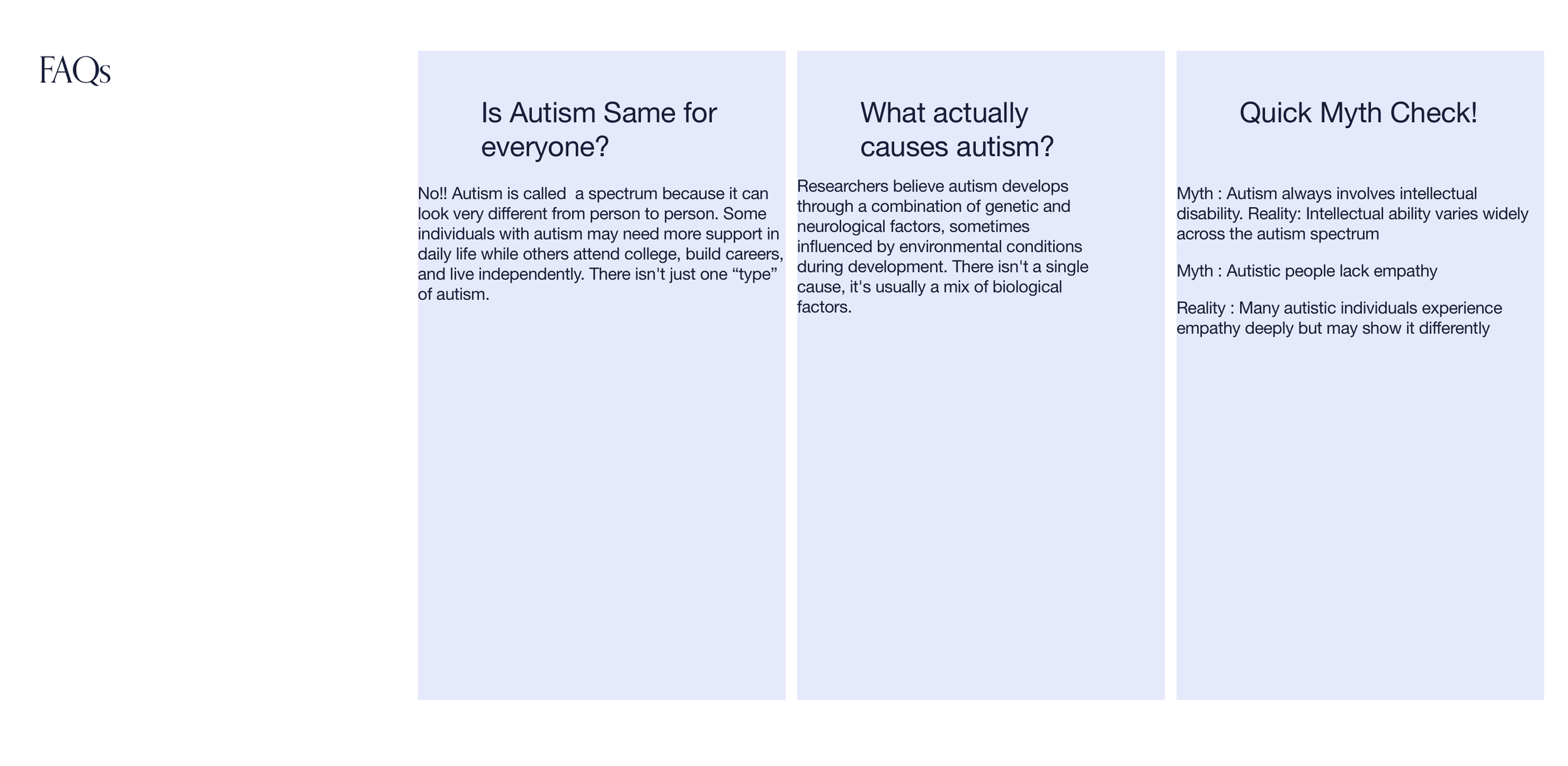
Autism exists on a spectrum and can present differently across individuals.
Only one of these statements reflects what psychological research actually shows.
Autism spectrum disorder is a neurodevelopmental condition that affects how individuals perceive, process and interact with the world around them. Although autism is widely discussed today, it is still frequently misunderstood. Many stereotypes portray autism as a single type of experience, when in reality autism presents very differently across individuals.
The purpose of this page is to provide a clear understanding of autism by examining its etiology, why it is considered a spectrum disorder and common misconceptions that often shape public perception. By exploring the scientific research behind autism and highlighting the diversity of autistic experiences, this page aims to promote a more accurate and inclusive understanding of the condition.
Learning Objectives
By engaging with this page readers should be able to :
Explain what ASD is and how it is defined in psychology
Describe the etiology of autism, including genetic and neurological influences
Understand why autism described as a spectrum disorder and how symptoms vary across individuals
Identify and challenge common misconceptions and stereotypes about autism
What is Autism Spectrum Disorder?
Autism Spectrum Disorder is classified in the DSM-5-TR as a neuro-developmental disorder characterized by two primary categories of symptoms:
Differences in social communication and social interaction :
Individuals with autism may experience challenges in interpreting social cues, understanding non-verbal communication, or engaging in typical patterns of social interaction. These differences can vary significantly in intensity and form across individuals.
2. Restricted or repetitive patterns of behavior, interests or sensory experiences :
Many autistic individuals display strong interests in particular subjects, prefer predictable routines or experience heightened sensitivity to sensory input such as sounds, lights or textures.
It is important to note that autism is not a single type of personality or behavior. Instead it represents a wide range of neurological differences that influence how individuals think, communicate and experience the environment.
Why Autism is called a Spectrum?
One of the defining characteristics of Autism Spectrum Disorder is the variability in how it presents across individuals. The term spectrum reflects the fact that autistic individuals can differ widely in terms of their ability, challenges and daily experiences.
For example, autistic individuals may vary in :
Communication styles
Sensory sensitivities
Social preferences
Cognitive abilities
Level of support needed in daily life
Some individuals may communicate verbally and live independently, while others may require greater support in areas such as communication or daily functioning. Recognizing autism as a spectrum helps move away from simplistic stereotypes and encourages a more nuanced understanding of individual experiences.
What causes Autism? (Etiology)
Research suggests that Autism Spectrum Disorder develops through a combination of genetic, neurological, and environmental factors rather than a single cause.
Genetic Factors
Studies consistently show that genetics play a major role in autism. Twin studies demonstrate that identical twins are significantly more likely to both be autistic compared to fraternal twins, indicating a strong hereditary component. (Tick et al., 2016)
Researchers have identified hundreds of genes that may influence brain development and contribute to autism related traits.
Neurological Development
Brain imaging research has identified differences in how certain brain regions develop and communicate with another in autistic individuals. These regions often involve networks related to social processing, language development and sensory integration (Lord et al., 2020).
Many scientists now describe these differences as variations in neurological processing, rather than simply deficits.
Environmental Influences
Environmental factors during prenatal development may also interact with genetic predispositions. Researchers have examined influences such as prenatal age, prenatal health conditions and pregnancy complications.
However, these factors do not independently cause autism but may contribute to its development alongside genetic influences.
Addressing A Common Misconception
One of the most persistent misconceptions about autism is the belief that vaccines cause autism. This claim originated from a study published in 1998 that was later retracted due to falsified and ethical violations. Since then, numerous large scale studies involving hundreds of thousands of participants have consistently found no causal relationship between vaccines and autism(Hviid et al.,2019).
Why Understanding Autism Matters ?
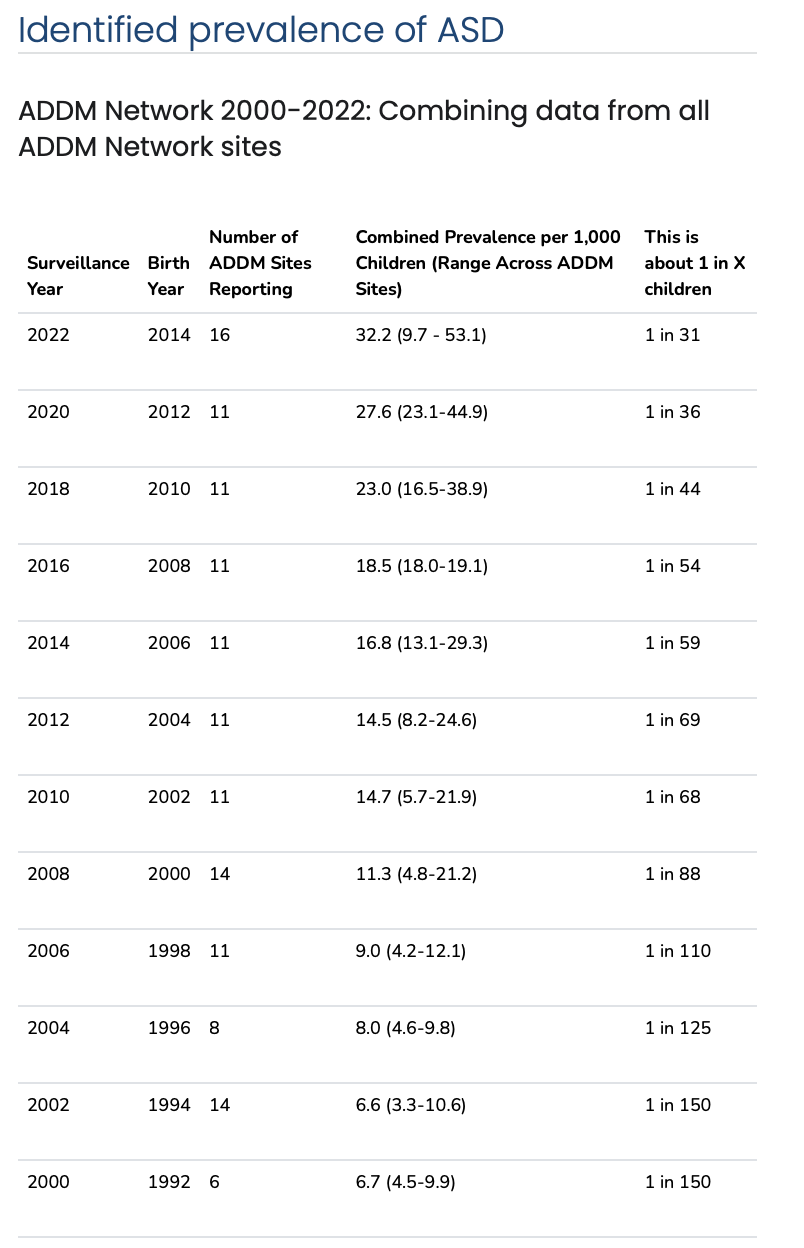
Autism is more common than many people realize.Current estimates suggest that approximately 1 in 31 children in the United States are diagnosedWith autism spectrum disorder (CDC,2022).
Because autism affects millions of individuals and families, it is important to promote accurate understanding and reduce stigma.
https://www.cdc.gov/autism/data-research/index.html
Recognizing autism as a spectrum helps create :
More inclusive schools and workplaces
Better access to mental health and support services
Greater acceptance of Neurodiversity
Improved public understanding of neurological differences
Ultimately, Understanding autism and is not just about learning a diagnosis.It is about recognizing and respecting the diversity of human experiences.
One Last Thought
Imagine two people :
Person A avoids eye contact, prefers routines and has a strong interest in planes
Person B attends university, feels empathy deeply but struggles with social cues and loud environment
Many People would assume only Person A could be autistic. But in reality, both individuals could be on the autism spectrum.This is why psychologists emphasize the word spectrum. Autism does not describe one type of person or experience, it reflects a wide range of neurological differences.
Understanding autism means moving beyond your stereotypes and recognizing that there is no single “autistic story.”
References :
Tick, B., Bolton, P., Happé, F., Rutter, M., & Rijsdijk, F. (2016). Heritability of autism spectrum disorders: a meta-analysis of twin studies. Journal of child psychology and psychiatry, and allied disciplines, 57(5), 585–595. https://doi.org/10.1111/jcpp.12499
Hviid, A., Hansen, J. V., Frisch, M., & Melbye, M. (2019). Measles, Mumps, Rubella Vaccination and Autism: A Nationwide Cohort Study. Annals of Internal Medicine, 170(8), 513. https://doi.org/10.7326/M18-2101
Lord, C., Brugha, T. S., Charman, T., Cusack, J., Dumas, G., Frazier, T., & Veenstra-VanderWeele, J. (2020). Autism spectrum disorder. Nature Reviews Disease Primers, 6(1), 5. https://doi.org/10.1038/s41572-019-0138-4
Voelker, R. (2024). What Is Autism Spectrum Disorder? JAMA : The Journal of the American Medical Association, 331(19), 1686–1686. https://doi.org/10.1001/jama.2024.3041

Voelker, R. (2024)